
Professional Geotechnical Solutions
Get In Touch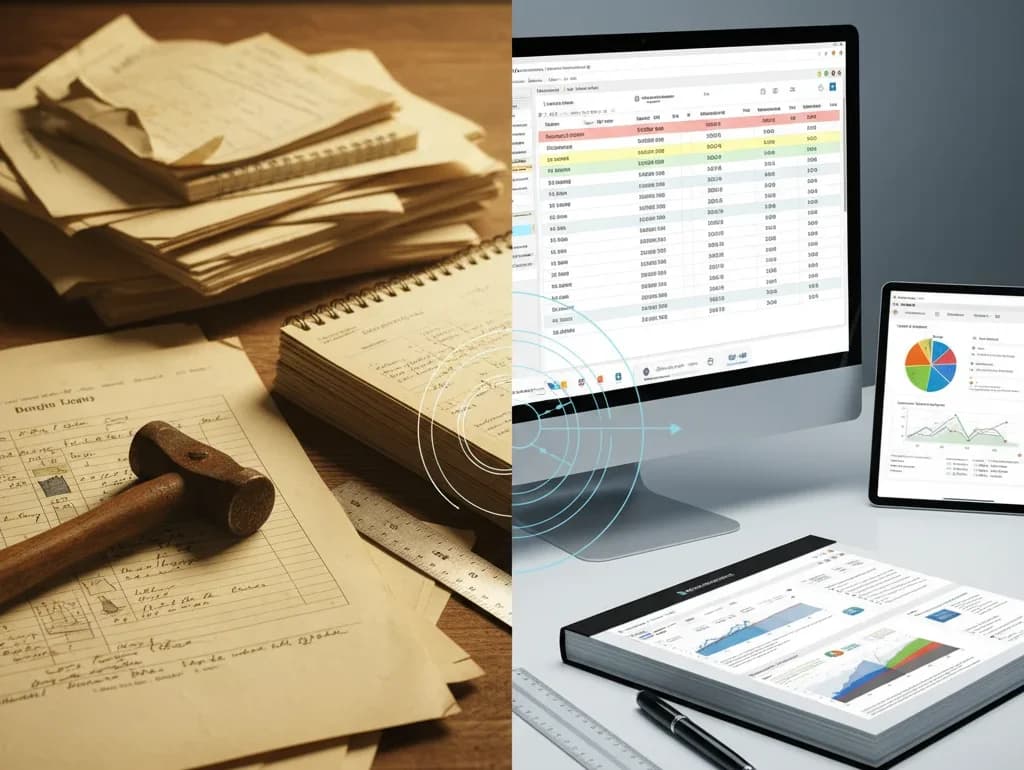
GFR AI (Geotechnical Factual Reporting AI) is an intelligent reporting platform designed to automate the preparation of Geotechnical Factual Reports from site investigation data. The platform consolidates information from borehole logs, test pits, laboratory testing, CPT records, groundwater observations, field investigations, and geotechnical databases to generate structured, accurate, and industry-compliant factual reports.
By eliminating repetitive report preparation tasks, GFR AI enables geotechnical professionals to produce high-quality factual reports faster while maintaining consistency, traceability, and data integrity. The platform acts as an intelligent reporting assistant that transforms raw geotechnical data into professional client-ready documentation.
Preparing Geotechnical Factual Reports is often a labor-intensive process that requires engineers and geologists to collect information from multiple sources, verify data accuracy, format tables, compile appendices, and prepare consistent documentation.
Common challenges include:
As investigation programs become larger and more complex, the effort required to prepare factual reports continues to grow.
GFR AI automates the transformation of geotechnical investigation data into professionally structured factual reports.
The platform gathers information from borehole logs, laboratory testing results, CPT records, groundwater observations, field notes, and investigation databases. It then organizes the information into a standardized report structure, generates tables and appendices, validates data consistency, and prepares client-ready documentation.
By automating repetitive reporting activities, GFR AI allows engineers and geologists to focus on technical review and quality assurance rather than manual document preparation.
The result is faster reporting, improved consistency, reduced errors, and enhanced project delivery efficiency.
Generate complete Geotechnical Factual Reports directly from site investigation data.
Consolidate information from borehole logs, test pits, CPT records, laboratory testing, and field observations.
Automatically organize investigation results into structured report sections.
Generate standardized summaries of subsurface conditions and investigation findings.
Compile and present laboratory testing results within consistent reporting formats.
Capture and present groundwater observations, monitoring results, and related field measurements.
Create professional tables, figures, appendices, and supporting documentation automatically.
Perform consistency checks across logs, test results, coordinates, depths, and project metadata.
Ensure reports align with organizational standards, client requirements, and reporting guidelines.
Produce reports in Word, PDF, and editable formats ready for client submission.
Users upload or connect borehole logs, CPT records, laboratory reports, field observations, and project metadata.
GFR AI extracts, organizes, and validates geotechnical information from multiple investigation sources.
The platform automatically generates report sections, investigation summaries, tables, figures, and appendices.
The system performs validation checks to identify missing information, inconsistencies, or formatting issues.
A fully formatted Geotechnical Factual Report is generated and made available for engineering review and client submission.
Collects and consolidates information from boreholes, test pits, CPTs, laboratory testing, and field observations.
Automatically builds report sections using predefined templates and project-specific information.
Verifies consistency across depths, coordinates, sample numbers, test results, and project metadata.
Creates appendices, borehole logs, test pit records, laboratory summaries, and supporting documentation.
Identifies omissions, formatting issues, and data inconsistencies before report publication.
Maintains company templates, client requirements, and industry reporting standards.
GFR AI can automatically compile and report:
Many geotechnical professionals spend substantial time compiling information that already exists in digital or semi-digital formats. While technical expertise remains essential for quality review, much of the reporting process involves repetitive formatting, data transfer, and document assembly activities.
GFR AI eliminates these inefficiencies by automating report production while maintaining traceability to original investigation data.
The result is faster delivery, improved consistency, and more time available for technical review and project execution.
As site investigations become larger and more data-intensive, organizations need more efficient ways to transform raw field data into professional reports.
GFR AI enables engineering teams to standardize reporting processes, improve productivity, and deliver factual reports faster without compromising quality or accuracy.
Reduce report preparation time from days to hours through intelligent automation.
Standardize report quality across projects, offices, and technical teams.
Minimize transcription mistakes and formatting inconsistencies.
Allow engineers and geologists to focus on technical review rather than document preparation.
Automatically validate investigation data before report issuance.
Produce professional, consistent, and client-ready reports faster.
Maintain structured and reusable investigation data across projects.
Handle larger volumes of investigation work without proportionally increasing reporting resources.
GFR AI is a product of Pineuron, Melbourne, VIC, Australia.

